


Dev Journal #1: Crimson Freedom - 15 Years in the Making
Article posted on 10/27/2026
Dev Journal #1: Crimson Freedom - 15 Years in the Making
How an ambitious sci-fi concept from 2010 evolved into a real-time strategy game about humanity's future.'
The story of Crimson Freedom began long before we started developing the game itself. In fact, its foundations were laid nearly fifteen years ago, in a science-fiction universe that looked very different from the Mars we know today.
But first, we needed a reason to make an RTS.
From Casual Games to Real-Time Strategy
Before Crimson Freedom, our studio was developing casual mobile games. As major publishers increasingly dominated the market, competing as an independent developer became more difficult. Eventually, we decided to sell our existing game business and invest the proceeds into something we genuinely wanted to create.
And since we had all grown up playing real-time strategy games, the choice was obvious.
After years of colorful, cheerful mobile games, as one of our developers put it: "We just wanted explosions and shooting!"
We initially experimented with a science-fiction setting inspired by conspiracy theories, ancient civilizations, and extraterrestrials. But the concept quickly became too fragmented.
That's when we rediscovered the Grey Project.
A Universe Born in 2010
Grey Project was a personal science-fiction project dating back to approximately 2010. Its original story followed human explorers who discovered an ancient alien spacecraft beneath Antarctica, capable of teleporting them to another planet. This was before Prometheus was filmed, mind you.
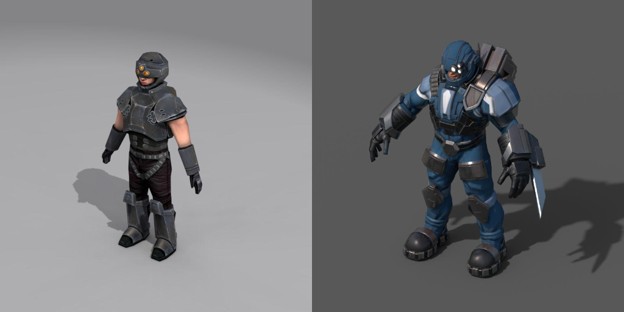
There, humanity established colonies, extracted resources, and eventually descended into conflict.
The setting was different, but the foundations of Crimson Freedom were already there.
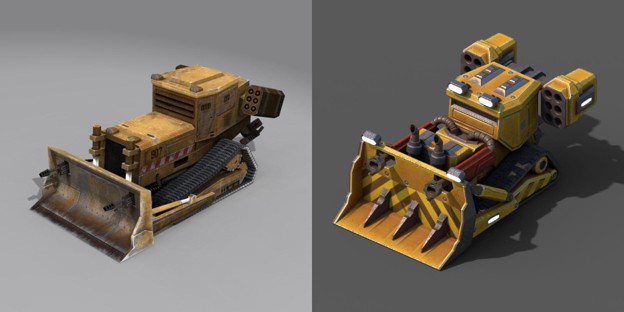
An authoritarian military organization, originally called Ground Military, would evolve into Orbis Concordia. Colonists rebelling against oppression would become the Red Rebellion, even converting industrial machinery into combat vehicles.
And a mysterious faction called the Binary Purity Cult, experimenting with transferring human consciousness into crystals and machines, would eventually become AscentX.
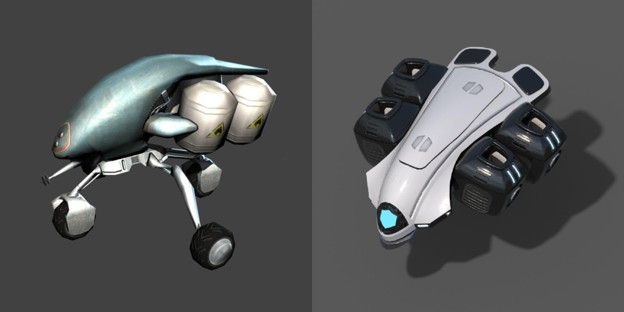
As technology advanced in the real world, so did our fictional universe. Concepts that seemed far-fetched fifteen years ago, artificial intelligence, cloud computing, and human-machine integration, became increasingly relevant.
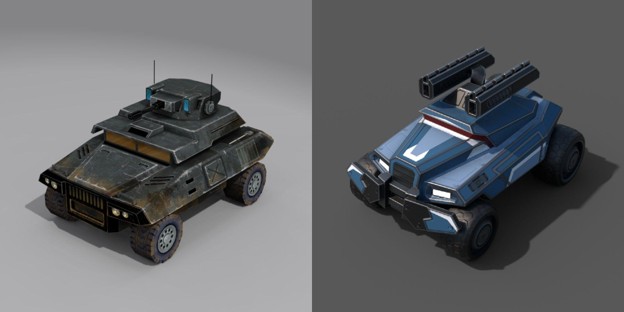
Three Factions, Three Futures
Over the years, Grey Project was rewritten, expanded, and transformed. Its setting moved to Mars, its factions evolved, and countless story iterations gradually converged into the world of Crimson Freedom.
But one central idea remained unchanged.
Our three factions represent the life humanity lived, the life we live today, and the life we might live tomorrow.
The Red Rebellion represents our industrial past and our fight for personal and collective freedoms. Orbis Concordia embodies the institutions and technological systems of the present, just dialed to 11, a perfect tyranny. AscentX represents a possible future where humanity transcends its biological limitations.
Their conflict is more than a struggle for control of Mars. It's a clash between different visions of what humanity should become.
A Story That Never Stopped Evolving
Crimson Freedom started with our love for real-time strategy games, but its story explores something deeper: the challenges of human evolution and the increasingly blurred boundary between humans and machines.
We didn't create a finished story and then built a game around it. The story evolved with us, through years of experimentation, rewriting, and discovery.
Fifteen years later, the setting has changed, the technology has changed, and the factions have evolved. But the question at the heart of Crimson Freedom remains the same:
Where is humanity heading, and what will we become when we get there?

